
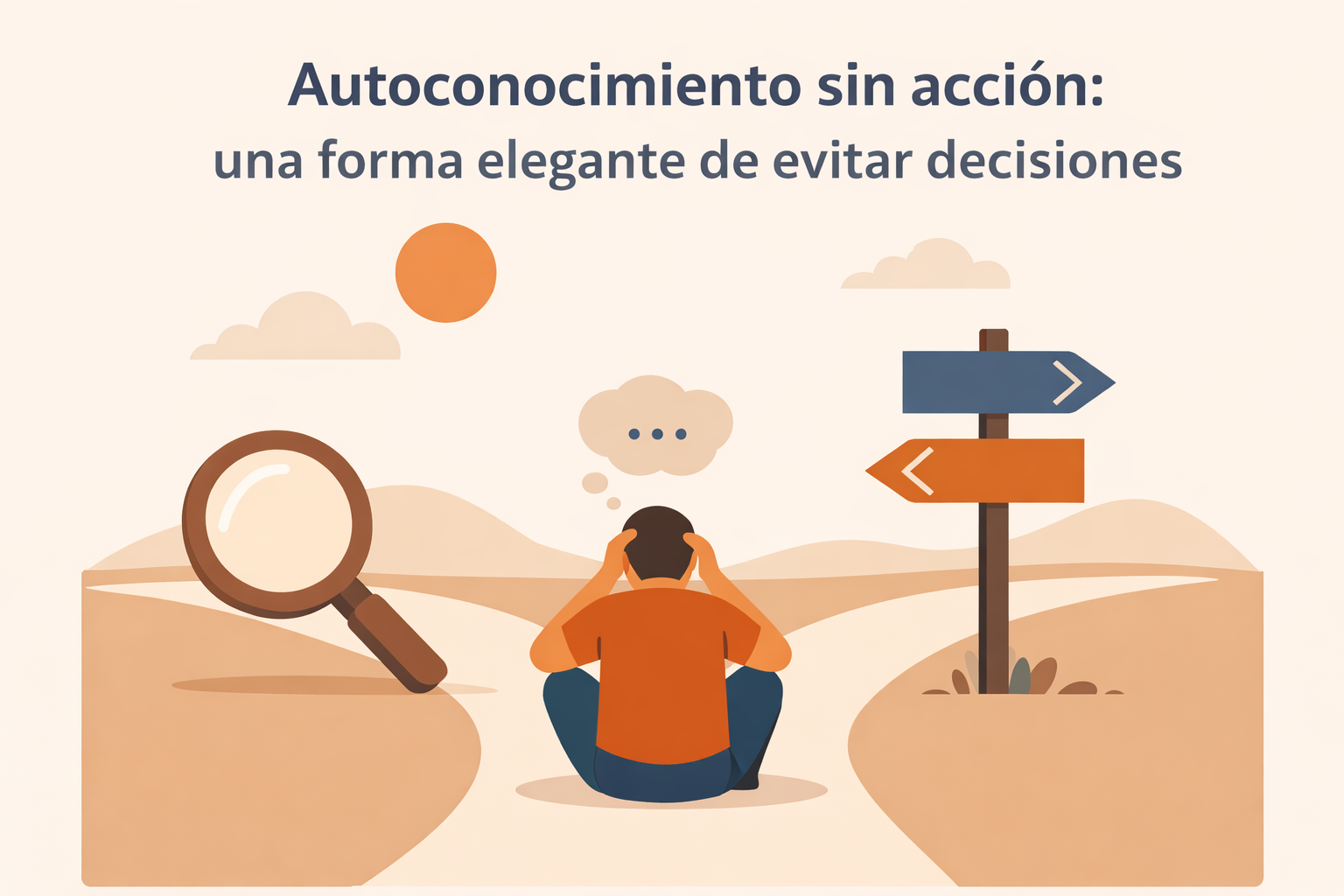
Autoconocimiento sin acción: una forma elegante de evitar tomar decisiones
Hay personas que se conocen muy bien.
Entienden sus patrones, su historia y sus bloqueos. Han trabajado su desarrollo personal durante años. Y, sin embargo, siguen en el mismo lugar.
El problema no es la falta de claridad. Es la evitación de una decisión.
El autoconocimiento puede convertirse en una forma elegante de no elegir. En este artículo exploro por qué entender no siempre lleva a la acción y cómo el coaching ayuda a pasar del análisis constante a la decisión consciente.
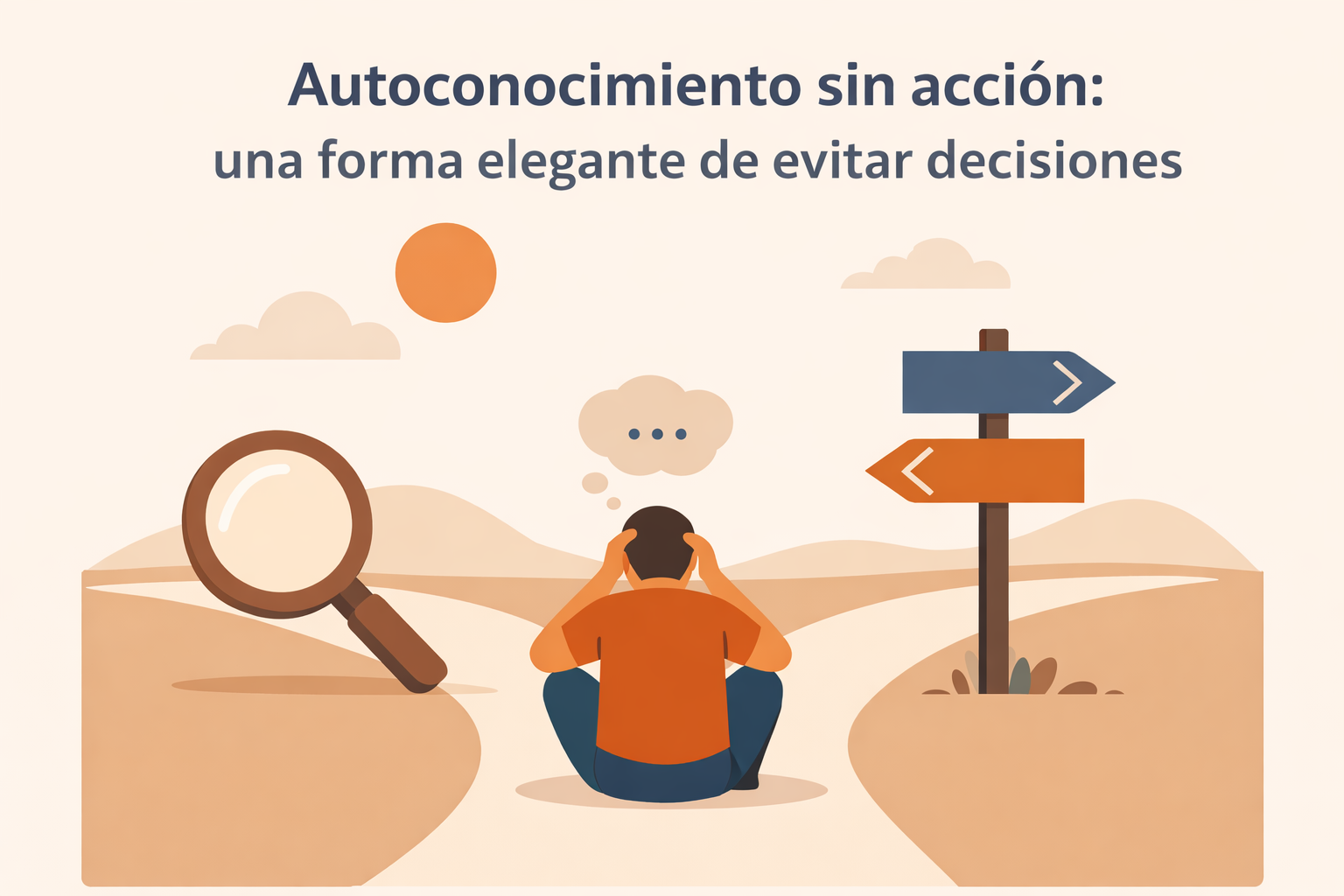
Ilustración en estilo plano de una persona reflexionando en una encrucijada, símbolo del autoconocimiento sin acción y la evitación de decisiones.
Hay personas que se conocen muy bien. Saben de dónde vienen, qué les duele, qué patrones repiten y por qué reaccionan como reaccionan. Han leído libros, escuchado podcasts, hecho terapia o trabajado su desarrollo personal durante años.
Y aun así, su vida sigue prácticamente igual.
No porque no entiendan lo que les pasa, sino porque no están decidiendo.
Este artículo no va de criticar el autoconocimiento ni el desarrollo personal. Va de señalar cuándo se convierte en una forma sofisticada de evitar lo que toca hacer.
Cuando el autoconocimiento se convierte en una pausa permanente
El autoconocimiento es valioso. Sin él, vamos a ciegas.
El problema aparece cuando entender se usa como sustituto de elegir.
Frases como:
“Todavía lo estoy observando”
“Necesito más claridad”
“Sé que esto tiene que ver con mi historia”
suenan profundas, pero a veces esconden lo mismo: una decisión que se está posponiendo.
No es falta de capacidad ni de recursos. Es miedo, ambivalencia o incomodidad ante las consecuencias reales de elegir.
Porque decidir siempre implica perder algo.
El coste invisible de no tomar decisiones
No decidir también es una decisión.
Tiene un coste silencioso:
desgaste mental,
sensación de estar atrapado,
pérdida de confianza en uno mismo,
una vida en modo “stand by”.
Cuanto más tiempo pasa, más difícil parece moverse. No por falta de recursos, sino porque la persona empieza a verse a sí misma como alguien que no avanza.
Y eso pesa.
Cómo puede ayudar un coach cuando hay mucho autoconocimiento pero poca acción
Un coach no está para ayudarte a entenderte mejor cuando ya te entiendes.
Si ya te entiendes, eso no es lo que falta.
El valor del coaching aparece cuando el foco cambia del “por qué soy así” al “qué estoy evitando ahora”.
Veamos cómo.
1. Del análisis del pasado a la decisión en el presente
Muchas personas hablan con enorme lucidez de su historia.
Pero viven demasiado tiempo ahí.
Un coach no niega el pasado, pero devuelve la atención al presente:
¿Qué decisión concreta está pendiente hoy?
¿Qué situación actual te pide una respuesta?
No se trata de analizar más, sino de mirar lo que está pasando ahora mismo.
2. De la ambigüedad mental a la responsabilidad personal
El autoconocimiento sin acción suele ir acompañado de lenguaje difuso.
Un coach ayuda a concretar:
¿entre qué opciones reales estás?
¿qué estás eligiendo al no elegir?
¿qué coste tiene seguir como estás seis meses más?
No empuja. No convence.
Pero pone claridad donde antes había niebla.
3. Del exceso de análisis a la experiencia real
Pensar sobre el miedo no es lo mismo que atravesarlo.
El coaching no se queda en la cabeza.
Acompaña a dar pequeños pasos reales:
conversaciones que se evitan,
límites que no se ponen,
decisiones que se retrasan “un poco más”.
La acción no es para demostrar nada, sino para ver qué pasa de verdad.
Algo importante: acción no es exigirte más
Este punto es clave.
Un buen coach no convierte la acción en otra forma de exigencia.
No se trata de hacer más, más rápido o mejor.
A veces la acción es:
decir no,
parar,
cerrar una etapa,
sostener una incomodidad sin huir.
Eso también es acción, aunque no se vea productiva desde fuera.
El verdadero bloqueo no es la falta de claridad, es evitar elegir
En la mayoría de los casos, las personas saben bastante bien qué decisión está pendiente.
Lo difícil no es entender.
Lo difícil es asumir las consecuencias de elegir.
El coaching no te quita esa responsabilidad.
Te acompaña para que dejes de usar tu lucidez como refugio y empieces a usarla como base para decidir.
Para cerrar: del autoconocimiento a la acción consciente
El autoconocimiento es un punto de partida, no un lugar donde quedarse.
Cuando se convierte en una pausa permanente, deja de ayudarnos.
A veces no necesitas comprenderte más.
Necesitas dejar de postergar la decisión que ya sabes que está ahí.
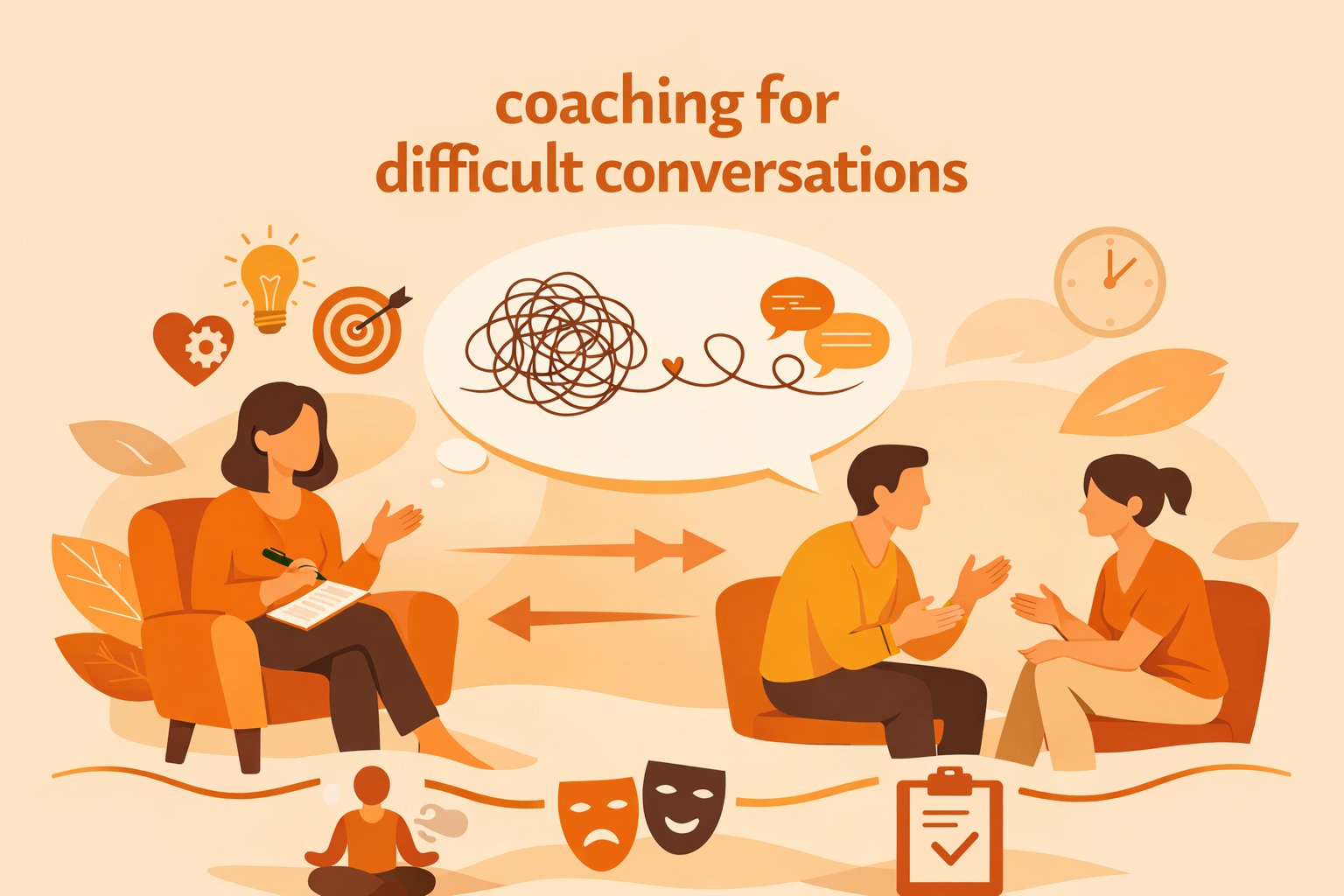
Coaching for difficult conversations
Coaching helps professionals prepare for difficult conversations with clarity, emotional awareness, and confidence. By exploring intentions, managing emotions, and practicing key communication skills, coaching turns challenging conversations into opportunities for growth, trust, and stronger relationships.
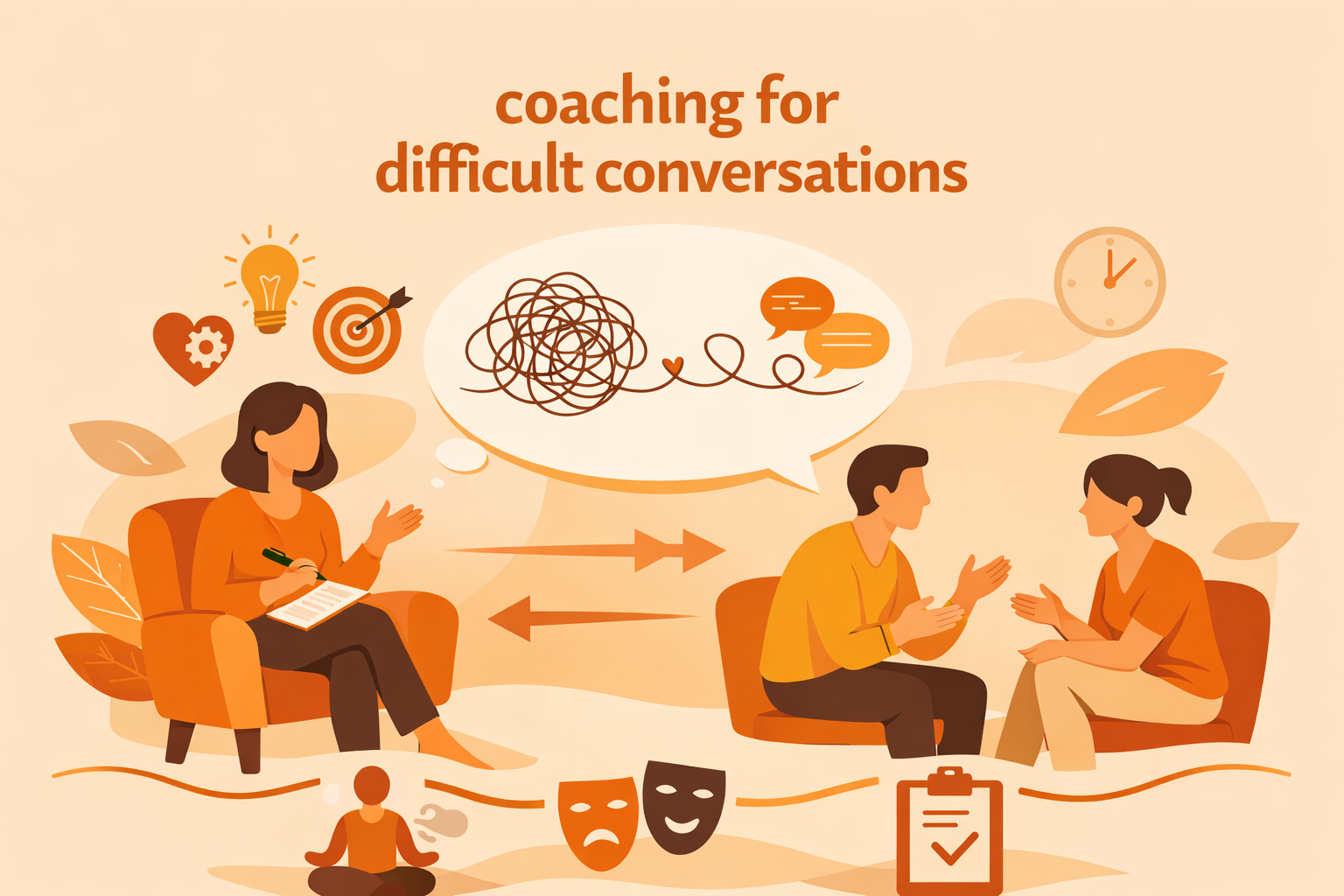
Flat-style illustration in warm tones showing a coaching session that supports people in having difficult conversations, moving from confusion to clarity.
How Coaching Helps You Prepare for Difficult Conversations
Difficult conversations are one of the most common challenges we face — at work, at home and in leadership. They can stir anxiety, trigger avoidance, or leave us feeling uncertain about the impact of our words. Yet, these conversations are often essential: they clarify expectations, strengthen relationships, and unlock growth that otherwise stays dormant. With coaching, you don’t just prepare for these conversations — you transform how you show up in them.
Why Difficult Conversations Matter
Whether it’s giving constructive feedback, addressing a conflict, or speaking up about something that truly matters, difficult conversations carry emotional weight. Most of us rehearse them in our heads, imagining worst-case scenarios and rehearsing defensive responses. That inner rehearsal rarely prepares us well. It can even deepen anxiety and delay action. With coaching, preparation shifts from anxious projection to intentional readiness.
Coaching as a Space for Clarity
At its core, coaching creates a structured space to explore your thoughts, fears, and intentions. Instead of being driven by impulse or assumption, you gain clarity about what you want to communicate and why. You begin to distinguish between emotions that distract and intentions that guide. A coach helps you articulate your real goals for the conversation: what outcome matters most, what boundaries you need to hold, and what fears are getting in the way.
This clarity is not about rehearsing a script — it’s about understanding your internal landscape so you can engage authentically. When you know what matters to you and why, your communication becomes intentional and grounded rather than reactive.
Building Emotional Awareness and Regulation
One of the hidden challenges in difficult conversations is emotional activation: stress, fear, or frustration can hijack your words if you’re not prepared. With coaching, you don’t just talk about emotions — you learn to recognize and regulate them. Through reflection and guided questions, you deepen emotional intelligence — the ability to observe your own triggers and responses.
This emotional awareness becomes a tool, not a hindrance. You become more capable of staying present, listening deeply, and responding rather than reacting — which creates space for meaningful dialogue instead of conflict escalation.
Practicing Before the Moment
Real preparation isn’t just about planning what to say — it’s about practicing how to stay aligned with your intention in the moment. Many coaching practices include role-playing or simulating parts of the conversation ahead of time. This isn’t rehearsal for perfection; it’s rehearsal for confidence. You try different approaches, explore what feels authentic, and notice where your reactions might lead you off track.
With each iteration, your nervous system becomes familiar with the emotional texture of the conversation. When the real moment arrives, there’s less fear of the unknown and more resilience to navigate unexpected turns.
A Coaching Lens for the Conversation Itself
Coaching doesn’t drop off once the conversation begins. The tools you build extend into the conversation: active listening, empathetic inquiry, and powerful questions aren’t just for coaching sessions — they are communication skills that deepen connection and reduce defensiveness.
For instance, instead of launching into your point, you might begin with:
“Help me understand how you see this situation.”
This simple shift invites the other person in, making the conversation a shared exploration rather than a confrontation.
After the Conversation: Reflection and Learning
The work doesn’t end when the conversation ends. Coaching encourages a reflective process where you explore what happened, what you learned, and what you might do differently next time. This reflection strengthens your ability for future conversations and turns each difficult interaction into a learning moment.
It’s not uncommon to walk away from a coaching-prepared conversation feeling more confident and more connected — not because you controlled the outcome, but because you showed up with clarity, intention, and presence.
Final Thought: Growth Through Courage, Not Avoidance
Difficult conversations will always be challenging — and that’s precisely why they are opportunities for growth. With coaching, you don’t collapse under pressure or rely on avoidance. You step into conversations with awareness, emotional regulation, and a clear sense of purpose. And as you practice this, difficult conversations become less threatening and more transformative — for you and for those you engage with.
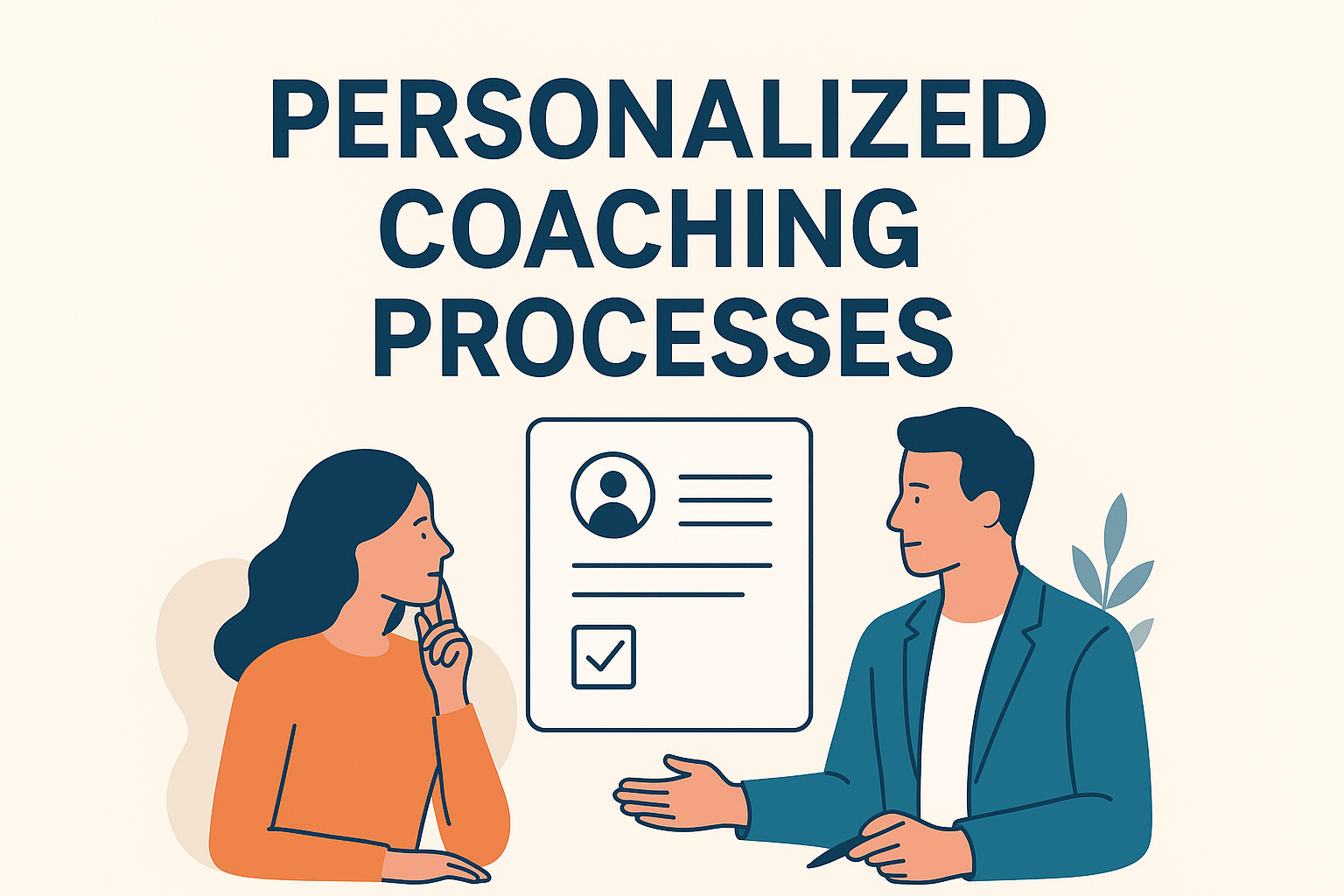
Personalized Coaching Processes: The Path to Transformative Growth
Discover how personalized coaching can unlock your potential and inspire lasting transformation. Through a tailored process grounded in trust, values, and purpose, you’ll gain clarity, confidence, and alignment with your true self. Explore how a personalized coaching journey creates meaningful, sustainable growth — one session at a time.
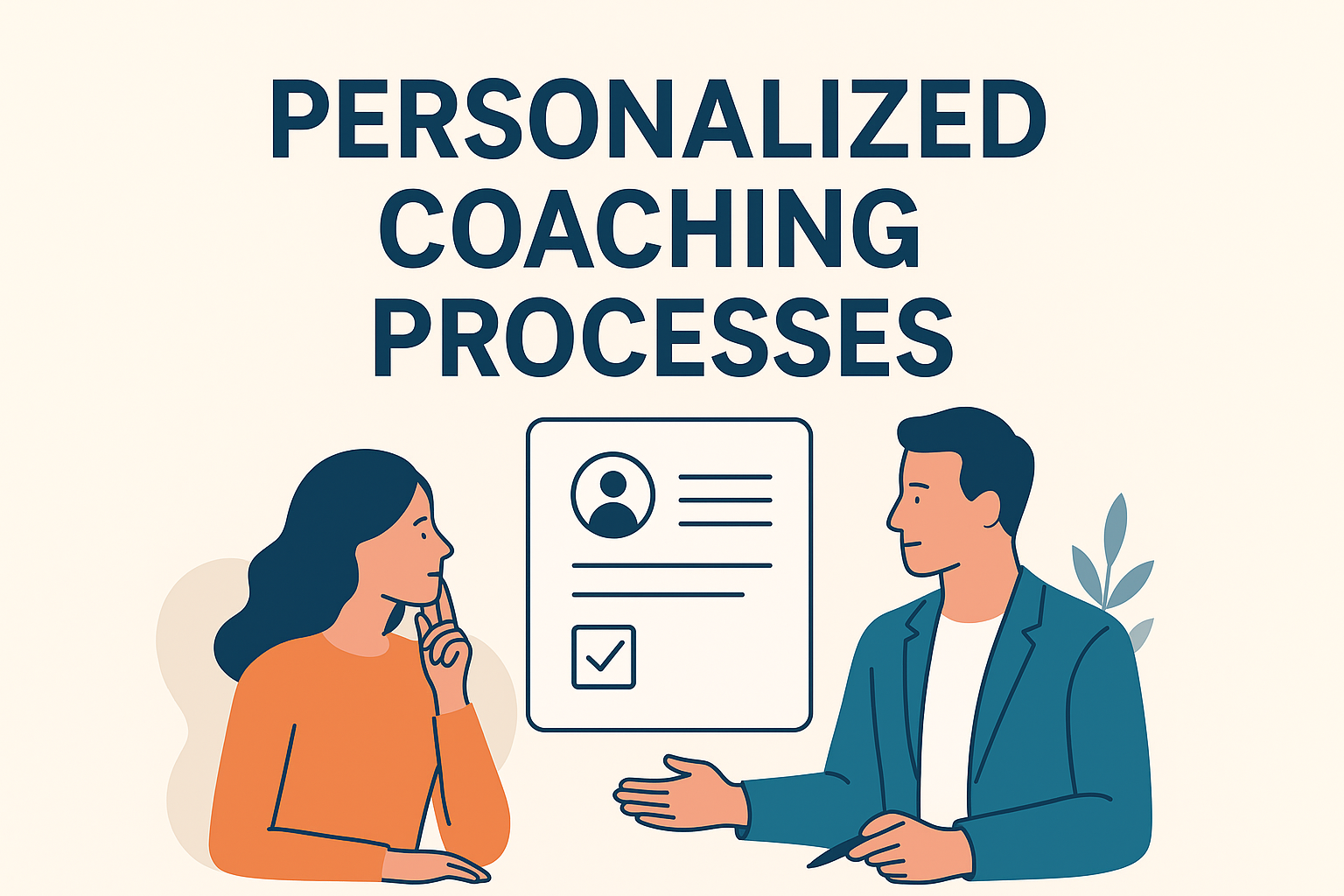
Flat illustration of a coach and client discussing a personalized coaching plan under the title “Personalized Coaching Processes.”
In a world filled with one-size-fits-all approaches, personalized coaching stands out as a journey of true transformation. It’s not about following a fixed formula — it’s about creating a living, evolving partnership between coach and coachee. Together, they co-design a process that reflects the person’s values, aspirations, and unique rhythm of growth.
Why Personalization Matters
Every individual brings a different story, energy, and life context to coaching. When we ignore that uniqueness, change becomes superficial or unsustainable. A personalized coaching process honors the full complexity of each person, helping them align more deeply with their authentic potential.
Real transformation doesn’t only happen in the sessions themselves. The most meaningful growth unfolds between sessions, as insights turn into new ways of thinking, leading, and living.
The Key Stages of a Personalized Coaching Process
1. A Deep Discovery Session
The process begins with a foundational 90-minute session focused on building trust, exploring goals, and clarifying the coachee’s values and purpose. This sets the tone for the journey ahead — one grounded in openness, curiosity, and clarity.
2. Coachee-Led Sessions
In each session, the coachee brings a theme or topic they wish to explore. The coach listens deeply, challenges perspectives, and helps uncover insights that lead to meaningful action. This approach ensures the process remains responsive to what’s truly alive for the coachee at that moment.
3. Actions Between Sessions
After each meeting, the coachee commits to specific actions or reflections designed to bring learning into real life. These are reviewed at the start of the next session, reinforcing accountability and integration.
As I often say, “the true learning generally occurs between sessions.”
4. A Reflective Closing Session
The process concludes with a retrospective session, where the coachee revisits their journey, celebrates growth, and integrates new insights. This final reflection ensures that change becomes a sustainable part of life and work.
5. Anchoring in Values and Purpose
Throughout the process, every step is grounded in personal values and deeper life purpose. The coach’s role is like that of a gardener — nurturing inner potential with integrity, compassion, equanimity, courage, and patience. These guiding principles sustain the coachee’s progress long after the formal coaching ends.
The Benefits of a Personalized Coaching Journey
Sustained transformation — insights turn into lasting habits and mindsets.
Empowerment — coachees learn to self-coach and lead with greater awareness.
Flexibility and resilience — the process adapts to life’s changing circumstances.
Purpose-driven growth — development remains anchored in authenticity and meaning.
Final Thoughts
A personalized coaching process is more than a method — it’s an invitation to explore who you truly are and who you’re becoming. It’s about uncovering your own answers, guided by presence, trust, and curiosity.
When coaching is personalized, every session becomes a mirror — reflecting not only what needs to change, but also the beauty of what’s already within.
Ready to Begin Your Own Journey?
If this approach resonates with you, I invite you to take the first step.
Book a discovery session — a space to explore your goals, values, and the kind of transformation you’re seeking. Together, we’ll design a coaching process that fits you — your pace, your purpose, your path.
👉 Schedule your discovery session here or visit the About page to learn more about how I work.